
Retinal Detachment Specialist

How does retinal detachment happen?

Your retina in the back of your eye is connected to the vitreous, a clear jellylike material that fills the center of your eye.
Sometimes the vitreous pulls away from your retina, tearing it in one or more places. Fluid fills this tear, lifting the retina off the back of your eye to cause retinal detachment.

What are the signs of retinal detachment?

A detached retina doesn’t work properly, causing vision that becomes blurry. Other potential symptoms include a large number of new floaters or flashes in your vision. You also might notice a gray curtain that crosses your field of vision.
Although flashes and floaters are quite common and don’t always mean you have a detached retina, if the flashes or floaters are suddenly more severe and your vision is worsening, call Austin Eye Center right away.
Retinal detachment can jeopardize your vision. It almost always causes blindness without proper treatment.

How is retinal detachment diagnosed?

A detached retina doesn’t work properly, causing vision that becomes blurry. Other potential symptoms include a large number of new floaters or flashes in your vision. You also might notice a gray curtain that crosses your field of vision.
Dr. Makkouk at Austin Eye Center diagnoses retinal detachment by dilating and examining your eye. He may suggest an ultrasound of your eye to gain additional details about the health of your retina. Once your diagnosis is complete, he recommends an appropriate surgical treatment to correct the detachment and safeguard your vision.

How is retinal detachment treated?

Dr. Makkouk treats most cases of retinal detachment with cryotherapy (freezing treatment), laser eye surgery, or vitrectomy to close the tear. Both laser surgery and cryotherapy work by sealing the retina to the back of your eye.
Vitrectomy is an outpatient procedure where Dr. Makkouk uses tiny surgical instruments to remove the vitreous in your eye, which is pulling on the retina, and replaces it with a gas bubble, repairing the detached retina.

When will my vision improve after retinal detachment repair?

Dr. Makkouk discusses realistic expectations based on the condition of your eye, the severity of the detachment, and other factors. After surgery, your vision should improve, but the process may take many months. In some cases, your vision may never return fully, particularly if the retinal tear was quite severe. That’s why it is important to contact Austin Eye Center as soon as you notice any problems with your vision.
If you have noticed more floaters or flashes than before, or your vision is suddenly worse, rely on Dr. Makkouk, a fellowship-trained surgical retina specialist, to prevent further damage due to retinal detachment. Call or book a consultation online with Austin Eye Center today.

WHAT WE OFFER

Our Services

eye exam being performed by an eye doctor

Macular Degeneration & AMD

Age-related macular degeneration damages cells in the macula, the part of the retina responsible for sharp, central vision.

Alcon Valeda Light Delivery System logo

Valeda Light Therapy

Valeda is the first FDA-authorized light therapy shown to improve vision in patients with dry age-related macular degeneration.

patient receiving eye exam from eye doctor

Diabetic Retinopathy

Diabetes can damage the blood vessels in the retina, a condition called Diabetic Retinopathy that may lead to vision loss if left untreated.
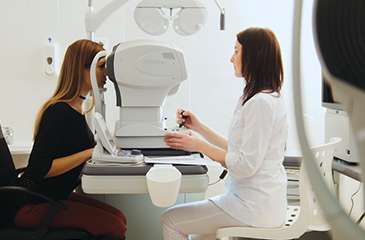
Patient receiving eye exam from eye doctor

Retinal detachment occurs when this light-sensitive layer pulls away from the back of the eye, a sight-threatening emergency that needs prompt treatment.

Patient receiving eye care

Vitrectomy

During a vitrectomy, Dr. Makkouk removes the gel-like vitreous from the back of the eye to treat a range of retinal conditions.


Patient positioned at a slit lamp during an eye examination

Floaters

Floaters are very common, and most adults notice them at some point in their lives — though they can occasionally signal a more serious issue.

Dr. Makkouk welcomes new and existing patients to Austin Eye Center.

To learn more, call or book an appointment online today.