
Diabetic Retinopathy

Fuad Makkouk, MD and the team at Austin Eye Center certainly understand that having Diabetes can be tough. In fact, Dr. Makkouk is both an Ophthalmologist and a Retinal Surgeon. For instance, he can perform laser, injections, or surgery to help treat your Diabetic Retinopathy. Therefore, if you need a Diabetic Eye Exam or have this complication, call or book an appointment online today.
Diabetic Retinopathy
When Diabetes affects the eyes, the condition is called Diabetic Retinopathy, and it can lead to vision loss or even blindness. This happens because high blood sugar levels damage the walls of blood vessels in the Retina, as well as in other parts of the body such as the Kidneys and Brain. As a result, these damaged blood vessels can leak, causing swelling, or burst, causing bleeding within the retina. Furthermore, in advanced cases, the damaged blood vessels may also grow into the wrong parts of the eye, leading to complications such as retinal detachment or glaucoma.
Diabetic Retinopathy Symptoms
In its mild form, Diabetic Retinopathy may not cause any noticeable symptoms at first. However, some Diabetics may experience blurred vision, fluctuating vision, floaters, or flashes of light. Because of this, timely examination and treatment are essential to keeping these symptoms from becoming permanent.
Types of Diabetic Retinopathy
Generally, there are two types of Diabetic Retinopathy: Non-proliferative and Proliferative Diabetic Retinopathy. Specifically, Non-proliferative diabetic retinopathy (NPDR) is the earlier stage of the condition, in which high blood sugars damage the retinal blood vessel walls. Consequently, this damage causes both leakage and bleeding within the retina, which can lead to vision loss.
In contrast, Advanced Diabetic Retinopathy, known as Proliferative Diabetic Retinopathy, is a more aggressive form of the disease. In this stage, blood vessels begin to grow into the wrong parts of the eye, which can lead to vision loss and even retinal detachment or glaucoma.
Diabetic Retinopathy Treatments
Dr. Makkouk trained in Retina Surgery at Yale University. As a result, he has the knowledge and tools to provide the best treatment for each individual patient. For example, treatment options may include lasers, injections, or surgery to help stop the disease from progressing.
Above all, for patient-centered Diabetic Retinopathy care, call Austin Eye Center or book an appointment online today.
WHAT WE OFFER
Our Services
The Retina
Your retina is a thin layer of light-sensitive cells lining the back of the eye, working much like film in a camera.

Retinal Detachment
Retinal detachment occurs when this light-sensitive layer pulls away from the back of the eye, a sight-threatening emergency that needs prompt treatment.
Floaters
Floaters are very common, and most adults notice them at some point in their lives — though they can occasionally signal a more serious issue.

Epiretinal Membrane
An epiretinal membrane is scar tissue that forms over the macula, often causing blurred or wavy vision.
Macular Hole
A macular hole can be symptom-free in its early stages, though many patients notice blurred or missing areas of central vision.
Vitrectomy
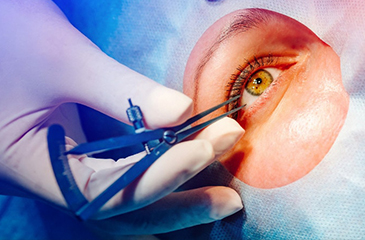
During a vitrectomy, Dr. Makkouk removes the gel-like vitreous from the back of the eye to treat a range of retinal conditions.