Macular Degeneration (AMD)
Macular Degeneration (AMD)
Age-related macular degeneration causes cells in the macula (the central portion of the retina responsible for vision) to die over time. This causes vision loss in both wet and dry macular degeneration.
Dry Macular Degeneration
About 80% of patients with macular degeneration have the dry form. Dry macular degeneration causes vision loss over a timespan of years by slowly causing the death of cells within the macula.
Austin Eye Center is proud to offer the first and only FDA-approved treatment for early to intermediate dry AMD: Valeda Light Therapy. This innovative, non-invasive therapy takes just minutes and may help prevent further vision loss while potentially improving sight.
Austin Eye Center also works closely with the newest clinical trials for preventing worsening dry macular degeneration in patients who are interested.
Dry AMD requires close follow up as it can progress to the wet form of macular degeneration which is more aggressive.
Wet Macular Degeneration
Wet age-related macular degeneration accounts for about 20% of macular degeneration, but is more aggressive than the dry form. This aggressive form can cause permanent vision loss within weeks.
Wet AMD occurs when blood vessels from underneath the retina break through and begin growing within the retina. These vessels tend to leak, causing swelling, or burst, causing bleeding, within the retina.
These vessels can also scar within the macula causing irreversible vision loss.
Symptoms
Risk Factors
Treatments
Dry AMD Treatment
Catching macular degeneration early is essential. The earlier it’s caught, the less vision is lost. Austin Eye Center offers Valeda Light Therapy, the first and only FDA-authorized light therapy for early to intermediate dry AMD.
Additional interventions can also help lower your risk of progressing to wet macular degeneration. Dr. Makkouk will discuss these options with you during your visit.
Dr. Makkouk is also one of the only retina specialists in Austin participating in several dry AMD clinical trials. He can discuss enrollment options if you’re interested in helping halt your dry macular degeneration.
Wet AMD Treatment
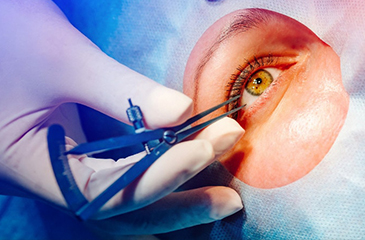
If you have wet macular degeneration, Dr. Makkouk and the Austin Eye Center team will review all treatment options with you and recommend the best path forward. Often, the most effective treatment is an eye injection that stops abnormal blood vessels from growing.
An eye injection can sound scary. Dr. Makkouk takes every step to keep you comfortable, including numbing the eye beforehand to make the procedure easier.
Dr. Makkouk also participates in wet AMD clinical trials and serves as Principal Investigator on several. If injections aren’t the right fit for your condition, he’ll discuss other options to help protect your vision.
Your vision is crucial to your quality of life. Austin Eye Center is committed to providing the highest quality, most innovative care for age-related macular degeneration in Austin. Call today or book your appointment online.
WHAT WE OFFER
Our Services

Valeda Light Therapy
Valeda is the first FDA-authorized light therapy shown to improve vision in patients with dry age-related macular degeneration.
The Retina
Your retina is a thin layer of light-sensitive cells lining the back of the eye, working much like film in a camera.

Retinal Detachment
Retinal detachment occurs when this light-sensitive layer pulls away from the back of the eye, a sight-threatening emergency that needs prompt treatment.

Epiretinal Membrane
An epiretinal membrane is scar tissue that forms over the macula, often causing blurred or wavy vision.
Macular Hole
A macular hole can be symptom-free in its early stages, though many patients notice blurred or missing areas of central vision.